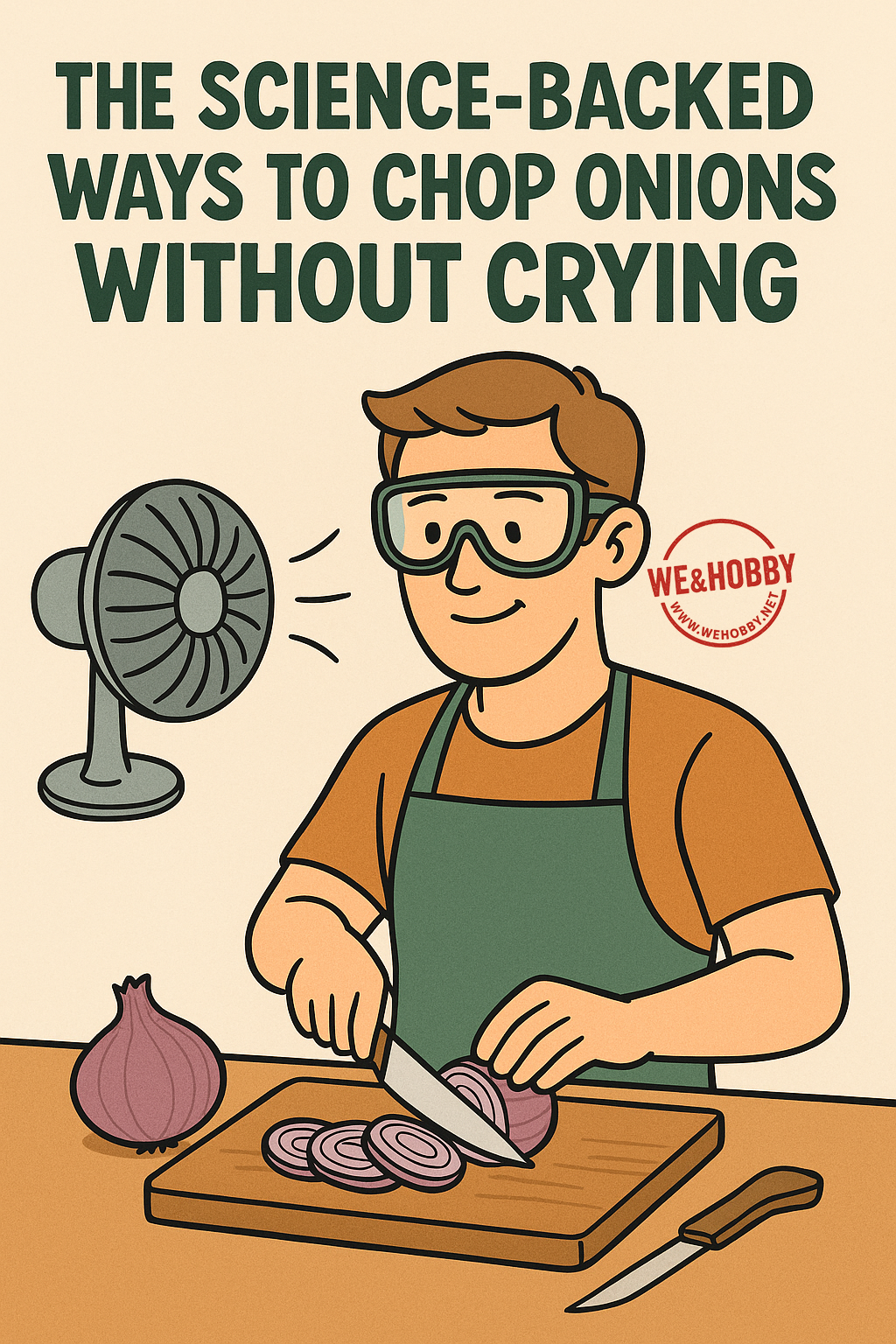
It's a universal kitchen struggle: you start chopping an onion, and within seconds, your eyes are stinging and filled with tears. But why does this happen, and what can you truly do about it? Let's cut through the old wives' tales and look at the methods that actually work, based on the science behind the sting.
Why Do Onions Make Us Cry?
It’s a brilliant plant defense mechanism. When you slice into an onion, you break its cells, releasing enzymes that react with sulfur compounds in the onion to create a volatile gas called syn-propanethial-S-oxide. When this gas reaches your eyes, it reacts with the water in your tears to form a mild sulfuric acid. Your eyes' natural response is to flush out the irritant, leading to a waterfall of tears.
The Most Effective Methods: Stopping the Gas at the Source
The goal is to prevent the gas from reaching your eyes. Here are the most reliable strategies, ranked from most to least effective.
1. The Cold Front: Chill Your Onions
How it works: Cooling the onion slows down the chemical reactions that release the irritating gas.
What to do: Pop your whole, unpeeled onions in the refrigerator for 30–60 minutes before you plan to chop them. This is one of the easiest and most effective methods.
2. Create a Water Barrier
Water is excellent at neutralizing the sulfur compounds.
-
Method A: Chop Underwater. Use a large cutting board and chop the onion in a shallow bowl or pan of cold water. This traps the gas before it can reach your eyes.
-
Method B: Use a Sharp Knife Under Running Water. A sharp knife causes less cell damage, releasing less gas. Rinsing the onion halves and your knife under cold water after peeling and between chops can also wash away the enzymes.
3. The Ultimate Defense: Wear Goggles
How it works: This creates a physical barrier, and it's 100% effective. You might feel a little silly, but you will have the last laugh with dry, comfortable eyes. Swimming goggles or lab safety glasses work perfectly.
The "Maybe It Helps" Methods (And The Science Behind Them)
These are the popular tricks you've heard about. Their effectiveness can vary, but they have a kernel of logical reasoning.
-
Chewing Gum: The theory is that chewing makes you breathe through your mouth more, which could draw the fumes away from your eyes and into your respiratory system. It's not a perfect shield, but it might help a little.
-
The Ventilation Powerhouse: Turn on your stove's exhaust fan or open a window. Creating a strong cross-breeze will pull the onion fumes away from your face.
The Myth-Buster Section
Let's address two common pieces of advice that don't hold up well to scientific scrutiny:
-
Biting a Wooden Spoon: There's no solid scientific mechanism for this. The idea might be that the dry, porous wood absorbs the fumes, but in practice, it's largely ineffective.
-
Lighting a Candle: A candle's flame is too small and its updraft too weak to consume a significant amount of the onion gas released during chopping.
So, the next time you're facing an onion, remember: a sharp, cold knife and a cold onion are your best friends. And if you really want to guarantee a tear-free experience, don't be shy—rock those goggles with pride.
Comments