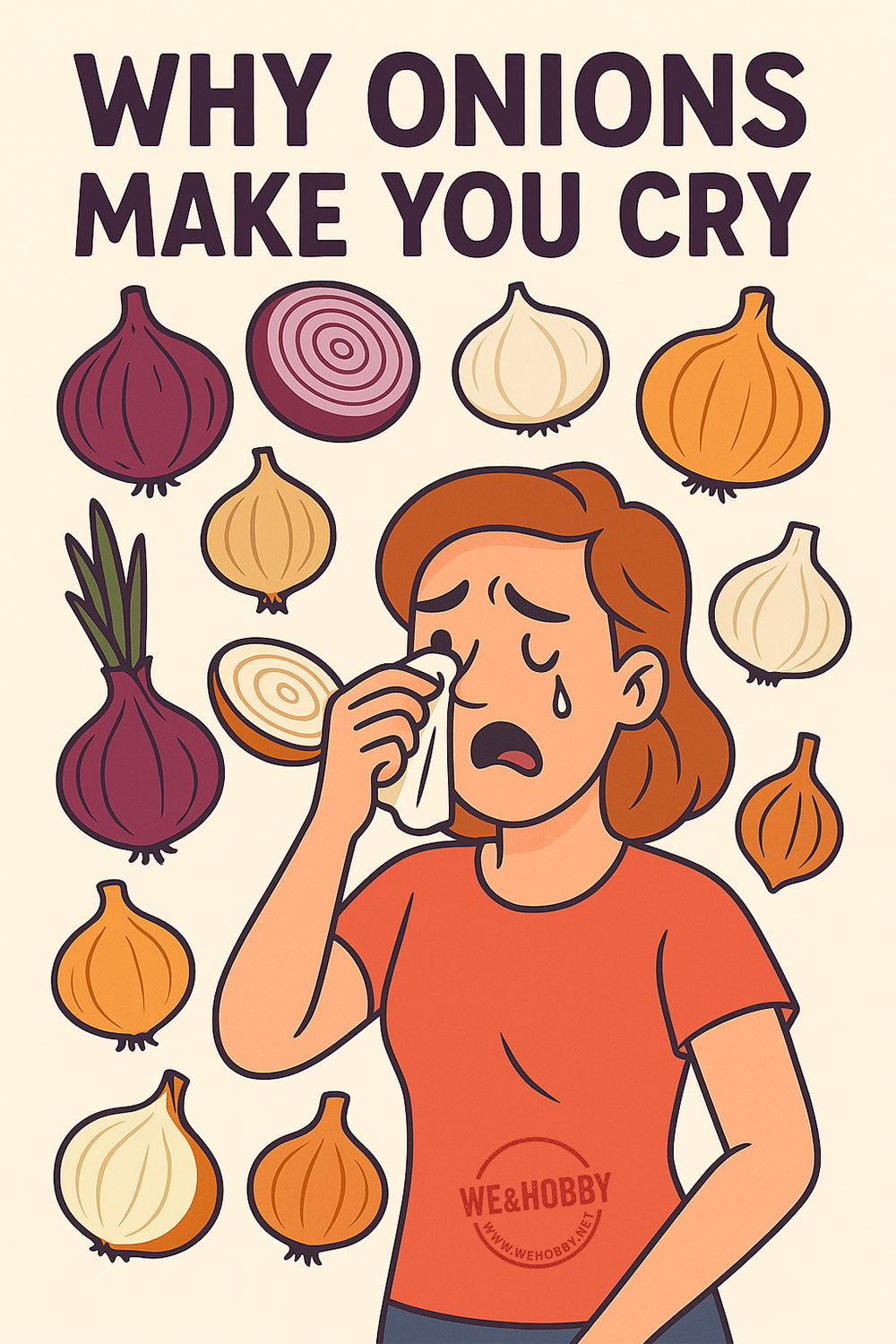
It's a universal kitchen dilemma: you're happily chopping vegetables, and then you pick up an onion. Within seconds, your eyes are stinging, and the tears start to flow. But why does this humble vegetable turn into a tiny tear-gas bomb the moment you slice into it? The answer is a brilliant piece of plant chemistry.
The Chemistry of Tears: It's All About Defense
An onion isn't just a simple vegetable; it's a complex structure designed for survival. To protect itself from being eaten, it has evolved a clever chemical defense mechanism stored in its cells.
Here’s what happens on a microscopic level:
-
Separate Compartments: Inside an onion's cells, two things are kept apart: a sulfur-based compound (called S-1-propenyl-L-cysteine sulfoxide) and an enzyme known as alliinase.
-
The Break-Up: When you slice through the onion, you break these cell walls, allowing the enzyme and the sulfur compound to mix.
-
The Chemical Reaction: This mixing creates a new, volatile gas called syn-propanethial-S-oxide.
-
The Attack: This gas quickly diffuses into the air and eventually reaches your eyes.
Why Your Eyes Freak Out
Your eyes are incredibly sensitive. When they detect the syn-propanethial-S-oxide gas, they don't know it's just from an onion. They interpret it as an irritant, like smoke or fumes.
The brain immediately triggers your eyes' defense system: your tear ducts. They start producing tears to flush out the foreign substance, leading to the familiar burning, stinging, and, of course, the waterfall of tears. It's your body's way of protecting you!
Hack Your Kitchen: How to Chop Onions Without Crying
You don't have to suffer for your cooking! Here are the most effective ways to outsmart an onion, backed by science:
-
Chill Out: Pop your onion in the fridge for 30 minutes before chopping. Cold temperatures slow down the chemical reactions, meaning less of the irritating gas is released.
-
Sharpen Up: Use a razor-sharp knife. A clean, sharp blade causes less cell damage than a dull one, which crushes the onion and releases more of the tear-inducing enzymes.
-
Leave the Root Intact: The root end of the onion has the highest concentration of the sulfur compounds. Always cut it last, or better yet, cut around it and discard it entirely.
-
Create a Barrier: Chop your onions under a running tap of water or submerged in a bowl of water. The gas will dissolve in the water before it can reach your eyes. Wearing swim goggles might look silly, but it’s a 100% effective solution.
-
Ventilate: Turn on your kitchen hood fan or open a window. Good airflow will whisk the gas away from your face before it can do any damage.
Not All Onions Are Created Equal
Did you know the type of onion you choose can change the game?
-
Yellow Onions: The biggest culprit. They have the highest sulfur content, making them the most potent tear-jerkers. Best for cooking, where their strong flavor mellows out.
-
White Onions: A medium offender. They still make you cry but are often slightly milder than yellow onions.
-
Red Onions: Generally milder. Their lower sulfur content and higher sugar levels make them a better choice for fresh dishes like salads.
-
Sweet Onions (e.g., Vidalia, Walla Walla): These are the champions of tear-free chopping! They are bred to have low sulfur and high sugar, making them much gentler on the eyes.
-
Green Onions/Scallions: These hardly ever cause tears because you're mostly chopping the green tops, which don't contain the same volatile compounds.
So next time you're prepping a meal, remember—you're not just cooking, you're conducting a cool science experiment. With these tips, you can win the battle against the onion and keep your tears for the truly emotional moments (like when you burn the garlic bread).
Comments